

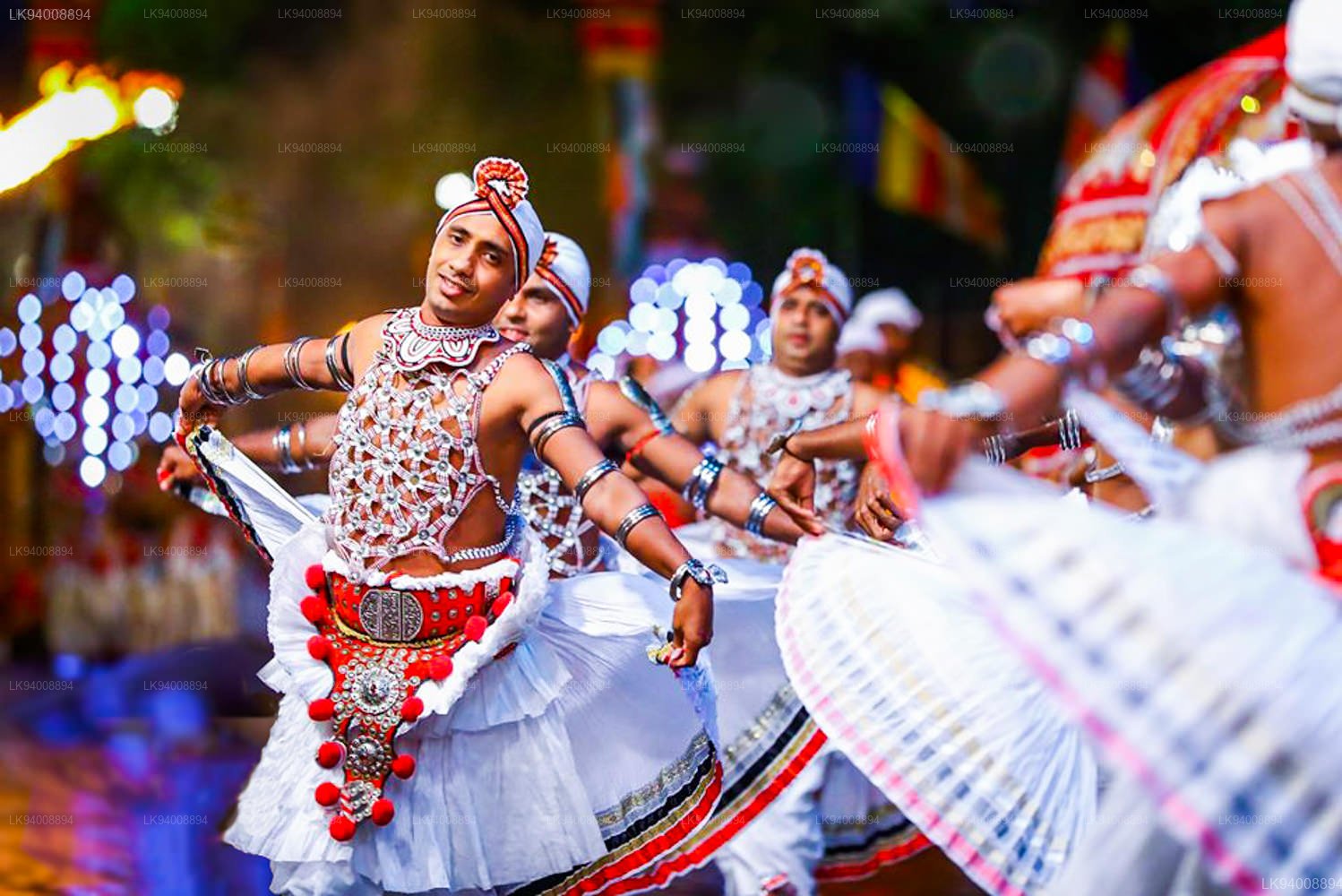
 What is the Kandy Esala Perahera?
The Sinhala word perahera simply means a ceremonial procession. The Kandy Esala Perahera, however, is far more than a parade. It is a living religious ritual that honours the Sacred Tooth Relic and petitions the four guardian deities of the island — Natha, Vishnu, Kataragama, and Goddess Pattini — for timely rain and agricultural prosperity. The festival is widely regarded as one of the oldest continuously held religious pageants in the world.
Scholars believe the present form of the Perahera is a fusion of two older traditions: the Esala procession, which dates back to at least the 3rd century BC and was conducted to invoke rain from the gods, and the Dalada procession, which celebrates the Sacred Tooth Relic itself. Together, they form a ceremony of extraordinary cultural and spiritual depth.
What is the history behind the Kandy Esala Perahera?
The origins of the Perahera are inseparable from the arrival of the Tooth Relic in Sri Lanka. According to historical accounts, Prince Danta and Princess Hemamala smuggled the relic from Kalinga, India, concealing it in the princess's hair, during the reign of King Kirthisiri Meghawanna (305–331 AD). Once the relic was received, the king decreed that it should be paraded through the city of Anuradhapura once a year — and so the annual procession began.
The Chinese pilgrim Fa Hien, who visited the island in the 5th century AD, left one of the earliest detailed written accounts of the Esala Perahera, describing enormous crowds and rich pageantry. Over the following centuries, waves of foreign invasion forced successive capitals — from Anuradhapura to Polonnaruwa, then through Dambadeniya and several other cities — but each move saw a new temple built for the relic, and the Perahera continued wherever the court resided.
When the Kandyan Kingdom established itself in the central highlands, the relic found a more permanent home, and the Perahera has been held in Kandy without significant interruption ever since. After the British annexed the Kandyan Kingdom in 1815, royal patronage gave way to lay stewardship: the title of Diyawadana Nilame was created to manage the Temple of the Tooth and oversee the Perahera on behalf of the Buddhist clergy.
When does the Kandy Esala Perahera take place?
The festival falls in the month of Esala, which corresponds to late July or August in the Gregorian calendar. The precise dates shift each year because they are determined by the lunar calendar — specifically, the festival culminates on the Nikini full moon Poya day. In practice, this means the grand processions take place over approximately ten nights, with the final and most elaborate procession, the Randoli Perahera, occurring on the last night.
Kap Situweema (Kap Planting): The ceremonial start, involving the planting of a sanctified young jackfruit sapling in each of the four devales (deity shrines) at an auspicious time set by astrologers. The sapling is anointed with sandalwood-scented water and offered nine varieties of flowers along with an oil lamp bearing nine wicks.
Kumbal Perahera (nights 1–5): Smaller, more intimate processions that build gradually in size and spectacle each night.
Randoli Perahera (nights 6–10): The grand processions, growing in splendour nightly. The final night — Maha Randoli — is the most spectacular.
Diya Kepeema (Water-Cutting Ceremony): The morning after the last procession, a ritual water-cutting ceremony at the Mahaweli River formally closes the festival. See the Diya-Kepeema ceremony page for more detail.
Curtesy
https://cdn.lakpura.com/images/LK94008894-02-E.JPG
What is the Kandy Esala Perahera?
The Sinhala word perahera simply means a ceremonial procession. The Kandy Esala Perahera, however, is far more than a parade. It is a living religious ritual that honours the Sacred Tooth Relic and petitions the four guardian deities of the island — Natha, Vishnu, Kataragama, and Goddess Pattini — for timely rain and agricultural prosperity. The festival is widely regarded as one of the oldest continuously held religious pageants in the world.
Scholars believe the present form of the Perahera is a fusion of two older traditions: the Esala procession, which dates back to at least the 3rd century BC and was conducted to invoke rain from the gods, and the Dalada procession, which celebrates the Sacred Tooth Relic itself. Together, they form a ceremony of extraordinary cultural and spiritual depth.
What is the history behind the Kandy Esala Perahera?
The origins of the Perahera are inseparable from the arrival of the Tooth Relic in Sri Lanka. According to historical accounts, Prince Danta and Princess Hemamala smuggled the relic from Kalinga, India, concealing it in the princess's hair, during the reign of King Kirthisiri Meghawanna (305–331 AD). Once the relic was received, the king decreed that it should be paraded through the city of Anuradhapura once a year — and so the annual procession began.
The Chinese pilgrim Fa Hien, who visited the island in the 5th century AD, left one of the earliest detailed written accounts of the Esala Perahera, describing enormous crowds and rich pageantry. Over the following centuries, waves of foreign invasion forced successive capitals — from Anuradhapura to Polonnaruwa, then through Dambadeniya and several other cities — but each move saw a new temple built for the relic, and the Perahera continued wherever the court resided.
When the Kandyan Kingdom established itself in the central highlands, the relic found a more permanent home, and the Perahera has been held in Kandy without significant interruption ever since. After the British annexed the Kandyan Kingdom in 1815, royal patronage gave way to lay stewardship: the title of Diyawadana Nilame was created to manage the Temple of the Tooth and oversee the Perahera on behalf of the Buddhist clergy.
When does the Kandy Esala Perahera take place?
The festival falls in the month of Esala, which corresponds to late July or August in the Gregorian calendar. The precise dates shift each year because they are determined by the lunar calendar — specifically, the festival culminates on the Nikini full moon Poya day. In practice, this means the grand processions take place over approximately ten nights, with the final and most elaborate procession, the Randoli Perahera, occurring on the last night.
Kap Situweema (Kap Planting): The ceremonial start, involving the planting of a sanctified young jackfruit sapling in each of the four devales (deity shrines) at an auspicious time set by astrologers. The sapling is anointed with sandalwood-scented water and offered nine varieties of flowers along with an oil lamp bearing nine wicks.
Kumbal Perahera (nights 1–5): Smaller, more intimate processions that build gradually in size and spectacle each night.
Randoli Perahera (nights 6–10): The grand processions, growing in splendour nightly. The final night — Maha Randoli — is the most spectacular.
Diya Kepeema (Water-Cutting Ceremony): The morning after the last procession, a ritual water-cutting ceremony at the Mahaweli River formally closes the festival. See the Diya-Kepeema ceremony page for more detail.
Curtesy
https://cdn.lakpura.com/images/LK94008894-02-E.JPG
What is the Kandy Esala Perahera?
The Sinhala word perahera simply means a ceremonial procession. The Kandy Esala Perahera, however, is far more than a parade. It is a living religious ritual that honours the Sacred Tooth Relic and petitions the four guardian deities of the island — Natha, Vishnu, Kataragama, and Goddess Pattini — for timely rain and agricultural prosperity. The festival is widely regarded as one of the oldest continuously held religious pageants in the world.
Scholars believe the present form of the Perahera is a fusion of two older traditions: the Esala procession, which dates back to at least the 3rd century BC and was conducted to invoke rain from the gods, and the Dalada procession, which celebrates the Sacred Tooth Relic itself. Together, they form a ceremony of extraordinary cultural and spiritual depth.
What is the history behind the Kandy Esala Perahera?
The origins of the Perahera are inseparable from the arrival of the Tooth Relic in Sri Lanka. According to historical accounts, Prince Danta and Princess Hemamala smuggled the relic from Kalinga, India, concealing it in the princess's hair, during the reign of King Kirthisiri Meghawanna (305–331 AD). Once the relic was received, the king decreed that it should be paraded through the city of Anuradhapura once a year — and so the annual procession began.
The Chinese pilgrim Fa Hien, who visited the island in the 5th century AD, left one of the earliest detailed written accounts of the Esala Perahera, describing enormous crowds and rich pageantry. Over the following centuries, waves of foreign invasion forced successive capitals — from Anuradhapura to Polonnaruwa, then through Dambadeniya and several other cities — but each move saw a new temple built for the relic, and the Perahera continued wherever the court resided.
When the Kandyan Kingdom established itself in the central highlands, the relic found a more permanent home, and the Perahera has been held in Kandy without significant interruption ever since. After the British annexed the Kandyan Kingdom in 1815, royal patronage gave way to lay stewardship: the title of Diyawadana Nilame was created to manage the Temple of the Tooth and oversee the Perahera on behalf of the Buddhist clergy.
When does the Kandy Esala Perahera take place?
The festival falls in the month of Esala, which corresponds to late July or August in the Gregorian calendar. The precise dates shift each year because they are determined by the lunar calendar — specifically, the festival culminates on the Nikini full moon Poya day. In practice, this means the grand processions take place over approximately ten nights, with the final and most elaborate procession, the Randoli Perahera, occurring on the last night.
Kap Situweema (Kap Planting): The ceremonial start, involving the planting of a sanctified young jackfruit sapling in each of the four devales (deity shrines) at an auspicious time set by astrologers. The sapling is anointed with sandalwood-scented water and offered nine varieties of flowers along with an oil lamp bearing nine wicks.
Kumbal Perahera (nights 1–5): Smaller, more intimate processions that build gradually in size and spectacle each night.
Randoli Perahera (nights 6–10): The grand processions, growing in splendour nightly. The final night — Maha Randoli — is the most spectacular.
Diya Kepeema (Water-Cutting Ceremony): The morning after the last procession, a ritual water-cutting ceremony at the Mahaweli River formally closes the festival. See the Diya-Kepeema ceremony page for more detail.
Curtesy
https://cdn.lakpura.com/images/LK94008894-02-E.JPG
What is the Kandy Esala Perahera?
The Sinhala word perahera simply means a ceremonial procession. The Kandy Esala Perahera, however, is far more than a parade. It is a living religious ritual that honours the Sacred Tooth Relic and petitions the four guardian deities of the island — Natha, Vishnu, Kataragama, and Goddess Pattini — for timely rain and agricultural prosperity. The festival is widely regarded as one of the oldest continuously held religious pageants in the world.
Scholars believe the present form of the Perahera is a fusion of two older traditions: the Esala procession, which dates back to at least the 3rd century BC and was conducted to invoke rain from the gods, and the Dalada procession, which celebrates the Sacred Tooth Relic itself. Together, they form a ceremony of extraordinary cultural and spiritual depth.
What is the history behind the Kandy Esala Perahera?
The origins of the Perahera are inseparable from the arrival of the Tooth Relic in Sri Lanka. According to historical accounts, Prince Danta and Princess Hemamala smuggled the relic from Kalinga, India, concealing it in the princess's hair, during the reign of King Kirthisiri Meghawanna (305–331 AD). Once the relic was received, the king decreed that it should be paraded through the city of Anuradhapura once a year — and so the annual procession began.
The Chinese pilgrim Fa Hien, who visited the island in the 5th century AD, left one of the earliest detailed written accounts of the Esala Perahera, describing enormous crowds and rich pageantry. Over the following centuries, waves of foreign invasion forced successive capitals — from Anuradhapura to Polonnaruwa, then through Dambadeniya and several other cities — but each move saw a new temple built for the relic, and the Perahera continued wherever the court resided.
When the Kandyan Kingdom established itself in the central highlands, the relic found a more permanent home, and the Perahera has been held in Kandy without significant interruption ever since. After the British annexed the Kandyan Kingdom in 1815, royal patronage gave way to lay stewardship: the title of Diyawadana Nilame was created to manage the Temple of the Tooth and oversee the Perahera on behalf of the Buddhist clergy.
When does the Kandy Esala Perahera take place?
The festival falls in the month of Esala, which corresponds to late July or August in the Gregorian calendar. The precise dates shift each year because they are determined by the lunar calendar — specifically, the festival culminates on the Nikini full moon Poya day. In practice, this means the grand processions take place over approximately ten nights, with the final and most elaborate procession, the Randoli Perahera, occurring on the last night.
Kap Situweema (Kap Planting): The ceremonial start, involving the planting of a sanctified young jackfruit sapling in each of the four devales (deity shrines) at an auspicious time set by astrologers. The sapling is anointed with sandalwood-scented water and offered nine varieties of flowers along with an oil lamp bearing nine wicks.
Kumbal Perahera (nights 1–5): Smaller, more intimate processions that build gradually in size and spectacle each night.
Randoli Perahera (nights 6–10): The grand processions, growing in splendour nightly. The final night — Maha Randoli — is the most spectacular.
Diya Kepeema (Water-Cutting Ceremony): The morning after the last procession, a ritual water-cutting ceremony at the Mahaweli River formally closes the festival. See the Diya-Kepeema ceremony page for more detail.
Curtesy
https://cdn.lakpura.com/images/LK94008894-02-E.JPG